"Basic income is going to reach mainstream politics. Just ask Andrew Yang, a former tech executive from New York, his entire 2020 campaign is based upon it. We saw it with Bernie Sanders being so popular among Millennials in 2016.
We see it with the decline of trust in Capitalism among younger Millennials and GenZ. Late in 2017, it was found that preliminary analysis of a European-wide survey has found young people are more in favour of introducing a universal income than their older peers.
This is not hard to understand, we have higher student loans, the cost of housing has risen dramatically, and job stability and economic uncertainty is on the rise. Healthcare costs are ballooning and last but not least, automation is coming. Automation is on our technological doorstep and we’re all in denial of its impact that could become personal.
With technological unemployment and a declining labor pool and falling birth rates, consumerism could be in trouble. You don’t disenfranchise young people and expect that it leads to good future outcomes. In fact, the political left and the right are already preparing their stances on basic income. You have to follow the script guys, if Silicon Valley are advocates for UBI, and AI regulation, there could be many explanations for it.
Experiments in Africa, have shown UBI has positive impacts and recipients do not abuse the “free money”.
If Robots and AI improve productivity and help automate tasks that humans used to do, free money might empower the sharing-economy and new forms of social entrepreneurship where humans will be most active: helping each other and the attention economy.
You cannot talk about regulating AI, without talking about the human consequences that AI and automation will create on human systems. Indeed this idea that Universal Basic Income is trending more, is in a way true. Basic income has its own subreddit, and pretty active tags here on Medium as well.
This is not something that’s going away, because technological unemployment is on the rise. We are just about to enter another wave of automation and if AI and robotics grows as some believe it will in the next two decades, the future of our children will be radically different from ours. This is because the very future of work and income might be irrevocably changed. In such a world of uncertainty, it will likely to take another great recession for things to finally make sense to all of us, and we’ll need something to lean back on."
Source
https://hackernoon.com/ubi-is-inevitable-de36ee5ab474
#UBI #UniversalBasicIncome #UniversalBasicIncomeWashington
Sunday, April 1, 2018

Saturday, January 28, 2017
UBI – That Radical Right-Wing Idea?
"Last week’s post — on a poverty eradication experiment in Africa of giving no-strings-attached cash — was a bit of a Trojan horse for this week: UBI is the idea of granting all adults a small amount of income, for life.


The best advocate in the United States for UBI that I’ve read is Charles Murray, in his 2016 version of his book “In Our Hands: A Plan to Replace the Welfare State,” in which he calls for a universal basic income of $13,000 for every adult in the United States. Somewhat to my surprise, I found his book, and the ideas, very compelling.
 Every American 21 years or older would receive a $13,000 annual stipend, of which the first $3,000 must be dedicated to catastrophic health insurance.
 Interestingly, in the United States UBI receives the harshest criticism from the left.
UBI is having a moment right now. Finland launched an experiment in 2017 to address joblessness with basic income, and the Netherlands is also attempting small-scale trials. Swiss voters rejected it in a referendum in 2016, but Swiss UBI supporters rejoice that it at least came up for a vote. A Silicon Valley startup Y-Combinator plans to launch a basic income experiment in Oakland, California, this year.
Futurists see UBI as the solution to the automation problem, when robots eliminate all of the human jobs. 1
The best advocate in the United States for UBI that I’ve read is Charles Murray, in his 2016 version of his book “In Our Hands: A Plan to Replace the Welfare State,” in which he calls for a universal basic income of $13,000 for every adult in the United States. Somewhat to my surprise, I found his book, and the ideas, very compelling.
Is Charles Murray a fellow traveler of Bernie Sanders, attempting to socialize America with his plan for free money? No. Actually, he’s just the opposite. He is a hard-core Libertarian, opposed to big government. In his version, UBI is meant to replace the welfare state built by President Franklin D. Roosevelt’s New Deal of the 1930s and President Lyndon B. Johnson’s Great Society programs of the 1960s.
Murray’s unexpected advocacy is what got me intrigued enough to read his book.
Charles Murray first came to wide academic prominence in the 1990s with his controversial book “The Bell Curve,” which placed him somewhat to the right of Attila the Hun on the political spectrum. Why, I wondered, would a right-wing guy propose UBI?
Murray’s idea, briefly, is this:
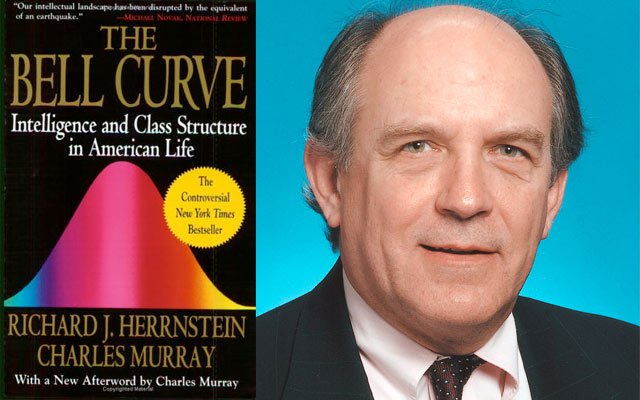 Every American 21 years or older would receive a $13,000 annual stipend, of which the first $3,000 must be dedicated to catastrophic health insurance.
As a Libertarian, Murray believes that giving recipients a choice of how to spend their money, rather than relying on a massive federal bureaucracy to control choices and incentives over housing, nutrition and work will improve the lives of people in poverty.
Although the UBI would cost $2.58 trillion per year (in 2014 dollars), Murray points out that our welfare infrastructure, as currently constituted, costs $2.77 trillion per year (also in 2014 dollars.), offering the federal government — and therefore, U.S. taxpayers — savings from UBI from the start.
Murray makes the interesting point that for people in poverty — in particular unwed mothers or unemployed young men of working age — a guaranteed income suddenly changes certain incentives. Those incentives, he argues, could address the roots of endemic poverty.
Murray speculates that UBI could directly benefit single mothers, for example, by providing a guaranteed source of income even if they cannot join the workforce while caring for a child. In addition, the fact that a child’s father receives a guaranteed income — easily tracked through a known bank account — would greatly aid collection of mandatory alimony payments. Murray further speculates that unemployed working-age men who might have previously lived for free with a relative or girlfriend may suddenly find themselves forced to pay rent, as they have known sources of cash.
A UBI could increase labor mobility for people who would like to move to where jobs are more plentiful, but do not have enough financial cushion to take the risk of relocation. Although $10,000 in available annual income is not very much money for any individual, when pooled by cooperative adults it could also serve as a boost to solve collective housing needs.
The long-term benefits of UBI remain speculative because only short-term and small-scale experiments have ever been tried in the United States — the largest being a 1970-1980 experiment in Seattle and Denver, with 4,800 participants. It produced data and policy directions thatresearchers found inconclusive.
Look, I know that it’s incredibly easy to criticize UBI. Just twenty seconds of thought gets me the following word salad:
- Politically untenable
- Disincentive to work hard, or work at all
- You might snort money-for-nothing straight up your nose
- Without necessity, where is the invention?
- Higher taxes
- Now we’ll REALLY need a wall
- Replacing some or all our social safety net programs at once sounds scary
- Is $13,000 the right amount?
I’m sure you will be able to come up with additional objections in another twenty seconds, and we’d probably agree on those as well.
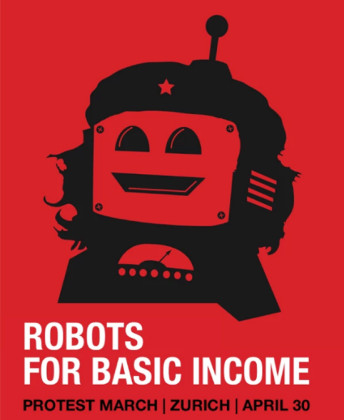 Interestingly, in the United States UBI receives the harshest criticism from the left.
Robert Greenstein, an advocate for traditional Democratic Party-sponsored programs to reduce poverty, came out strongly against UBI last year, calling it both politically unrealistic and a distraction from programs such as subsidized housing and minimum wage increases. Roosevelt Institute fellow Mike Konczal has argued that Libertarian claims of a bloated welfare state obscure the important work that social programs accomplish. Bernie Sanders has been asked repeatedly about UBI but always expresses a preference for “basic standard of living” policies rather than “basic income.”
Personally, I find the idea that people in poverty could be trusted with no-strings cash highly compelling, when compared with the complex alphabet soup of federal programs, including SNAP, Section 8, TANF and EITC. Wshould pay attention to poverty-relief experiments with direct cash payments in Africa, as they may do better than targeted programs that attempt to control the behavior of people in poverty.
In the face of financial dysfunction and the persistence of poverty — despite our great national wealth — we ought to be able to have a conversation about speculative and interesting ideas to address poverty."
Source
http://www.bankers-anonymous.com/blog/ubi-that-radical-right-wing-idea/
Universal Basic Income – The Good, The Bad and The Difficult
"When considering the subject of Universal Basic Income, many questions arise that dig far beyond our ‘practical’, and reach into our ’emotional’, stakes. Often, as with other topics, we battle between the academic and the humane, rather than collaborating the two into a common proposition.
The questions surrounding Universal Basic Income, or UBI, are not just whether its a good or bad idea, nor whether its more about social welfare or an issue of work ethic. There are also the questions of how to pay for it, and whether innovation and personal/personalized incentives become lost in the shuffle.
Within a year of its birth, the USA’s Affordable Care Act (ACA) is being questioned for revamping, while universal healthcare has existed for some time in a list of European countries, the United Arab Emirates and neighboring Canada.
In the USA, questions have not only surfaced about affordability, but also regarding basic elements of coverage and WHO pays WHAT.
There is ripe USA debate on whether those countries touting success actually have successful working programs. Opening the discussion on Universal Basic Income cuts deeper into a USA population who are already adrift in a sea of social and political re-identification.
Lines blur and edges cut on the whole area of ideals, what it means to be an American – Is it more about what you Get as an American, or more about what you Give? Are these opposing lines?
Finland has begun a pilot program for UBI, as a two year commitment of 560 euros monthly to a randomly selected population of 2000 Fins, and has a stated goal of increasing their employment statistics, as well as reducing the work required to apply for subsidies.
On January 1, 2017, Finland announced this two-year UBI initiative as a ‘no strings’ monthly income to all citizens, regardless of income status. This payment initiative is being questioned by Europeans and Americans alike for its rationale and sustainability. Still, the UK – with a much larger population ( UK 65million+ vs Finland 6million-) and more ethnically diverse citizenship, is considering joining the Finns in offering trial UBI. In May of 2016, in the USA, California was cited as the pilot state for a privately funded program by Y Combinator, a company known for working with founders of startups to grow their businesses into viable, sustainable entities.
It was scheduled to be conducted in Oakland, a multi-ethnic city with a full mix of opportunity to test the concept against a cross current of the population within this modern, technology centered civilization. The idea? To pay 100 families from across Oakland’s economic and ethnic population, $1500 US per month. The goal? To study if/how change occurs for people when basic income is not a challenge.
I encourage you to visit both programs’ outcomes by end of 2018 to learn what these two efforts have to teach us.
In the meantime, let’s consider some baselines so that we are thoughtful not to measure program against program vs program against non-program.
Finland is a country, and its population is under six million. Finland is not as diverse ethnically as the USA, nor even as diverse as Oakland. And – Finland already has universal health care. Oakland, shortly, may not have universal health care as identified today. Lastly, Finland’s plan is to launch a country supported UBI, while Oakland is a local site for Sam Altman’s Y Combinator funded pilot. Any guesses as to what we’ll fundamentally, programmatically and measurably learn – as outcomes – by December 2017?
The world’s political map will continue to change as history continues to happen quicker and quicker (aided by technology) and sophisticated trade deals will not be the sole answer to basic local needs. Near the end of 2016, I worked with a group in Washington, DC, to study the impact of technology on jobs and work. It’s coming – Work without people.
It’s existed for some time, but now has immediate and dramatic impact potential as, more and more, things make the things we want and need. So, how ‘universal’ will Universal Basic Income become? Countries that lead in innovation and/or growth do not always lead in social programs.
Is there a connection between these two that supposes solutions, or needs?
This question of public supported income has been asked for some time within democratic societies.
Thomas Paine, in 1797, questioned for basic capital grant for citizens, and Canada tried this UBI idea in the village of Dauphin during the 1970’s, where between 1977 and 1979, an attempt was made to elevate the incomes some of Manitoba’ s residents to living wages. They called it Mincome, and once it subsided, Dauphin’s residents went back to doing much of what had been done before.
Did the Dauphin program last long enough to prove an outcome, or did it prove that outcomes don’t change? Or…if as with beauty, the answer lies in the eye of the beholder, are we going to sleep on this while dreaming of a charming universal solution that does not disrupt our slumber? "
Source
http://askjbh.com/2017/01/10/universal-basic-income-good-bad-difficult/
#BasicIncome
#BasicIncomeWA
Universal Basic Income and Radical Populism: Making the Link
"
Source
http://www.forbes.com/sites/stratfor/2017/01/05/universal-basic-income-and-radical-populism-making-the-link/#29618fc1f021
#BasicIncome
#BasicIncomeWA
#BasicIncomeWashington
Source
http://www.forbes.com/sites/stratfor/2017/01/05/universal-basic-income-and-radical-populism-making-the-link/#29618fc1f021
#BasicIncome
#BasicIncomeWA
#BasicIncomeWashington
Is a basic income possible in D.C.? The city is looking into it.
#BasicIncome #BasicIncomeWA
"Tucked into the plan the D.C. Council unanimously approved Tuesday to raise the city’s hourly minimum wage to $15 by 2020 was an amendment to study an even more radical idea: a basic income.
[D.C. lawmakers approve $15 minimum wage, joining N.Y., Calif.]
Council member David Grosso (I-At-Large) successfully introduced an amendment that calls on the city’s Office of the Chief Financial Officer to study the possibility of providing a basic income in D.C.
Universal Basic Income is a policy in which the government gives its residents a certain amount of money to spend as they wish. The amount of money each person and family receives is tied to the cost of living in that jurisdiction.
The idea garnered international attention this week after voters in Switzerland overwhelmingly rejected a national proposal for a basic income.
Ontario is rolling out a pilot program soon to test the policy, and countries such as Finland are considering the idea. Economists and columnists in the United States have been debating the idea in prominent forums in recent months.
The idea is still a quixotic one in the District, but Grosso said he thinks it’s important for the nation’s capital to examine the minimum amount of money it takes to live in an increasingly expensive city and what it would take to implement a guaranteed basic income.
Grosso said he wants to see a combination of expanded subsidies for certain living expenses, such as transportation, and untethered income that people could spend as they wish.
“This is a complex idea that just hasn’t been studied here before,” he said.
Grosso voted in favor of the $15 minimum wage Tuesday, but says that a person working full time at that amount would only earn about $2,400 a month, which still isn’t enough.
“I think we should look at all the options and stop talking about things that are band-aid fixes, and really talk about what it takes to live in the District of Columbia,” he said. “The reality is that continuing to increase the minimum wage is not enough for people to live on here. ”
Source
https://www.washingtonpost.com/news/local/wp/2016/06/07/is-a-basic-income-possible-in-d-c-the-city-is-looking-into-it/?utm_term=.31bada9ea31b
#BasicIncomeWashington
Wednesday, May 25, 2016
China Quietly Prepares Golden Alternative to Dollar System; in Support of Basic Income
"China, as current chair of the G-20 group of nations, called on France to organize a very special conference in Paris. The fact such a conference would even take place in an OECD country is a sign of how weakened the hegemony of the US-dominated Dollar System has become.
By F. William Engdahl
On March 31 in Paris a special meeting, named “Nanjing II,” was held. People’s Bank of China Governor, Zhou Xiaochuan, was there and made a major presentation on, among other points, broader use of the IMF special basket of five major world currencies, the Special Drawing Rights or SDR’s. The invited were a very select few. The list included German Finance Minister Wolfgang Schaeuble, UK Chancellor of the Exchequer George Osborne, IMF Managing Director Christine Lagarde discussed the world’s financial architecture together with China. Apparently and significantly, there was no senior US official present.
On the Paris talks, Bloomberg reported: “China wants a much more closely managed system, where private-sector decisions can be managed by governments,” said Edwin Truman, a former Federal Reserve and US Treasury official. “The French have always favored international monetary reform, so they’re natural allies to the Chinese on this issue.”
A China Youth Daily journalist present in Paris noted, “Zhou Xiaochuan pointed out that the international monetary and financial system is currently undergoing structural adjustment, the world economy is facing many challenges…” According to the journalist Zhou went on to declare that China’s aim as current President of the G20 talks is to “promote the wider use of the SDR.”
For most of us, that sounds about as exciting as watching Johnson grass grow in the Texas plains. However, behind that seemingly minor technical move, as is becoming clearer by the day, is a grand Chinese strategy, if it succeeds or not, a grand strategy to displace the dominating role of the US dollar as world central bank reserve currency. China and others want an end to the tyranny of a broken dollar system that finances endless wars on other peoples’ borrowed money with no need to ever pay it back. The strategy is to end the domination of the dollar as the currency for most world trade in goods and services. That’s no small beer.
Despite the wreck of the US economy and the astronomical $19 trillion public debt of Washington, the dollar still makes up 64% of all central bank reserves. The largest holder of US debt is the Peoples Republic of China, with Japan a close second. As long as the dollar is “king currency,” Washington can run endless budget deficits knowing well that countries like China have no serious alternative to invest its foreign currency trade profits but in US Government or government-guaranteed debt. In effect, as I have pointed out, that has meant that China has de facto financed the military actions of Washington that act to go against Chinese or Russian sovereign interests, to finance countless US State Department Color Revolutions from Tibet to Hong Kong, from Libya to Ukraine, to finance ISIS in the Middle East and on and on and on…
Multi-currency world
If we look more closely at all the steps of the Beijing government since the global financial crisis of 2008 and especially since their creation of the Asian Infrastructure Investment Bank, the BRICS New Development Bank, the bilateral national currency energy agreements with Russia bypassing the dollar, it becomes clear that Zhou and the Beijing leadership have a long-term strategy.
As British economist David Marsh pointed out in reference to the recent Paris Nanjing II remarks of Zhou, “China is embarking, pragmatically but steadily, towards enshrining a multi-currency reserve system at the heart of the world’s financial order.”
Since China’s admission into the IMF select group of SDR currencies last November, the multi-currency system, which China calls “4+1,” would consist of the euro, sterling, yen and renminbi (the 4), co-existing with the dollar. These are the five constituents of the SDR.
To strengthen the recognition of the SDR, Zhou’s Peoples’ Bank of China has begun to publish its foreign reserves total–the world’s biggest–in SDRs as well as dollars.
A golden future
Yet the Chinese alternative to the domination of the US dollar is about far more than paper SDR currency basket promotion. China is clearly aiming at the re-establishment of an international gold standard, presumably one not based on the bankrupt Bretton Woods Dollar-Gold exchange that President Richard Nixon unilaterally ended in August, 1971 when he told the world they would have to swallow paper dollars in the future and could no longer redeem them for gold. At that point global inflation, measured in dollar terms, began to soar in what future economic historians will no doubt dub The Greatest Inflation.
By one estimate, the dollars in worldwide circulation rose by some 2,500% between 1970 and 2000. Since then the rise has clearly brought it well over 3,000%.
Without a legal requirement to back its dollar printing by a pre-determined fixed amount of gold, all restraints were off in a global dollar inflation. So long as the world is forced to get dollars to settle accounts for oil, grain, other commodities, Washington can write endless checks with little fear of them bouncing, stamped “insufficient funds.”
Combined with the fact that over that same time span since 1971 there has been a silent coup of the Wall Street banks to hijack any and all semblance of representative democracy and Constitution-based rules, we have the mad money machine, much like the German poet Goethe’s 18th Century fable, Sorcerers’ Apprentice, or in German, Der Zauberlehrling. Dollar creation is out of control.
Since 2015 China is moving very clearly to replace London and New York and the western gold futures price-setting exchanges.
As I noted in a longer analysis in this space in August, 2015, China, together with Russia, is making major strides to back their currencies with gold, to make them “as good as gold,” while currencies like the debt-bloated Euro or the debt-bloated bankrupt dollar zone, struggle.
In May 2015, China announced it had set up a state-run Gold Investment Fund. The aim was to create a pool, initially of $16 billion making it the world’s largest physical gold fund, to support gold mining projects along the new high-speed railway lines of President Xi’s New Economic Silk Road or One Road, One Belt as it is called. As China expressed it, the aim is to enable the Eurasian countries along the Silk Road to increase the gold backing of their currencies.
The countries along the Silk Road and within the BRICS happen to contain most of the world’s people and natural and human resources utterly independent of any the West has to offer.
In May 2015, China’s Shanghai Gold Exchange formally established the “Silk Road Gold Fund.” The two main investors in the new fund were China’s two largest gold mining companies–Shandong Gold Group who bought 35% of the shares and Shaanxi Gold Group with 25%.
The fund will invest in gold mining projects along the route of the Eurasian Silk Road railways, including in the vast under-explored parts of the Russian Federation.
A little-known fact is that no longer is South Africa the world’s gold king. It is a mere number 7 in annual gold production. China is Number One and Russia Number Two.
On May 11, just before creation of China’s new gold fund, China National Gold Group Corporation signed an agreement with the Russian gold mining group, Polyus Gold, Russia’s largest gold mining group, and one of the top ten in the world.
The two companies will explore the gold resources of what is to date Russia’as largest gold deposit at Natalka in the far eastern part of Magadan’s Kolyma District.
Recently, the Chinese government and its state enterprises have also shifted strategy. Today, as of March 2016 official data, China holds more than $3.2 trillion in foreign currency reserves at the Peoples’ bank of China, of which it is believed approximately 60% or almost $2 trillion are dollar assets such as US Treasury bonds or quasi-government bonds such as Fannie Mae or Freddie Mac mortgage bonds. Instead of investing all its dollar earnings from trade surpluses into increasingly inflated and worthless US government debt, China has launched a global asset buying strategy.
Now it happens that prime on the Beijing foreign asset “to buy” shopping list are gold mines around the world. Despite a recent slight rise in the gold price since January, gold is still at 5 year-lows and many quality proven mining companies are cash-starved and forced into bankruptcy. Gold is truly at the beginning of a renaissance.
The beauty of gold is not only what countless gold bugs maintain, a hedge against inflation. It is the most beautiful of all precious metals.
The Greek philosopher Plato, in his work The Republic, identified five types of regimes possible–Aristocracy, Timocracy, Oligarchy, Democracy, and Tyranny, with Tyranny the lowest most vile.
He then lists Aristocracy, or rule by Philosopher Kings with “golden souls” as the highest form of rule, benevolent and with the highest integrity. Gold has worth in its own right throughout mankind’s history. China and Russia and other nations of Eurasia today are reviving gold to its rightful place. That’s very cool."
Source
http://www.theeventchronicle.com/finanace/china-quietly-prepares-golden-alternative-dollar-system/?utm_campaign=coschedule&utm_source=facebook_page&utm_medium=The+Event+Handbook&utm_content=China+Quietly+Prepares+Golden+Alternative+to+Dollar+System#
http://www.cnbc.com/2014/05/27/what-russia-china-relations-mean-for-the-dollar.html
http://journal-neo.org/2016/05/18/china-quietly-prepares-golden-alternative-to-dollar-system/
http://www.bloomberg.com/news/articles/2014-10-13/russia-china-sign-currency-swap-agreement-to-double-100b-trade
http://www.washingtontimes.com/news/2014/nov/18/van-ness-russia-china-preparing-eliminate-our-rese/
https://www.cia.gov/library/publications/the-world-factbook/fields/print_2116.html
https://emergingequity.org/2015/03/03/more-de-dollarization-india-and-russia-on-the-verge-of-currency-agreement/
https://ec.europa.eu/energy/sites/ener/files/documents/1_EN_ACT_part1_v5_0.pdf
http://astanatimes.com/2014/12/kazakhstan-china-ink-14-billion-cooperation-deals/
By F. William Engdahl
On March 31 in Paris a special meeting, named “Nanjing II,” was held. People’s Bank of China Governor, Zhou Xiaochuan, was there and made a major presentation on, among other points, broader use of the IMF special basket of five major world currencies, the Special Drawing Rights or SDR’s. The invited were a very select few. The list included German Finance Minister Wolfgang Schaeuble, UK Chancellor of the Exchequer George Osborne, IMF Managing Director Christine Lagarde discussed the world’s financial architecture together with China. Apparently and significantly, there was no senior US official present.
On the Paris talks, Bloomberg reported: “China wants a much more closely managed system, where private-sector decisions can be managed by governments,” said Edwin Truman, a former Federal Reserve and US Treasury official. “The French have always favored international monetary reform, so they’re natural allies to the Chinese on this issue.”
A China Youth Daily journalist present in Paris noted, “Zhou Xiaochuan pointed out that the international monetary and financial system is currently undergoing structural adjustment, the world economy is facing many challenges…” According to the journalist Zhou went on to declare that China’s aim as current President of the G20 talks is to “promote the wider use of the SDR.”
For most of us, that sounds about as exciting as watching Johnson grass grow in the Texas plains. However, behind that seemingly minor technical move, as is becoming clearer by the day, is a grand Chinese strategy, if it succeeds or not, a grand strategy to displace the dominating role of the US dollar as world central bank reserve currency. China and others want an end to the tyranny of a broken dollar system that finances endless wars on other peoples’ borrowed money with no need to ever pay it back. The strategy is to end the domination of the dollar as the currency for most world trade in goods and services. That’s no small beer.
Despite the wreck of the US economy and the astronomical $19 trillion public debt of Washington, the dollar still makes up 64% of all central bank reserves. The largest holder of US debt is the Peoples Republic of China, with Japan a close second. As long as the dollar is “king currency,” Washington can run endless budget deficits knowing well that countries like China have no serious alternative to invest its foreign currency trade profits but in US Government or government-guaranteed debt. In effect, as I have pointed out, that has meant that China has de facto financed the military actions of Washington that act to go against Chinese or Russian sovereign interests, to finance countless US State Department Color Revolutions from Tibet to Hong Kong, from Libya to Ukraine, to finance ISIS in the Middle East and on and on and on…
Multi-currency world
If we look more closely at all the steps of the Beijing government since the global financial crisis of 2008 and especially since their creation of the Asian Infrastructure Investment Bank, the BRICS New Development Bank, the bilateral national currency energy agreements with Russia bypassing the dollar, it becomes clear that Zhou and the Beijing leadership have a long-term strategy.
As British economist David Marsh pointed out in reference to the recent Paris Nanjing II remarks of Zhou, “China is embarking, pragmatically but steadily, towards enshrining a multi-currency reserve system at the heart of the world’s financial order.”
Since China’s admission into the IMF select group of SDR currencies last November, the multi-currency system, which China calls “4+1,” would consist of the euro, sterling, yen and renminbi (the 4), co-existing with the dollar. These are the five constituents of the SDR.
To strengthen the recognition of the SDR, Zhou’s Peoples’ Bank of China has begun to publish its foreign reserves total–the world’s biggest–in SDRs as well as dollars.
A golden future
Yet the Chinese alternative to the domination of the US dollar is about far more than paper SDR currency basket promotion. China is clearly aiming at the re-establishment of an international gold standard, presumably one not based on the bankrupt Bretton Woods Dollar-Gold exchange that President Richard Nixon unilaterally ended in August, 1971 when he told the world they would have to swallow paper dollars in the future and could no longer redeem them for gold. At that point global inflation, measured in dollar terms, began to soar in what future economic historians will no doubt dub The Greatest Inflation.
By one estimate, the dollars in worldwide circulation rose by some 2,500% between 1970 and 2000. Since then the rise has clearly brought it well over 3,000%.
Without a legal requirement to back its dollar printing by a pre-determined fixed amount of gold, all restraints were off in a global dollar inflation. So long as the world is forced to get dollars to settle accounts for oil, grain, other commodities, Washington can write endless checks with little fear of them bouncing, stamped “insufficient funds.”
Combined with the fact that over that same time span since 1971 there has been a silent coup of the Wall Street banks to hijack any and all semblance of representative democracy and Constitution-based rules, we have the mad money machine, much like the German poet Goethe’s 18th Century fable, Sorcerers’ Apprentice, or in German, Der Zauberlehrling. Dollar creation is out of control.
Since 2015 China is moving very clearly to replace London and New York and the western gold futures price-setting exchanges.
As I noted in a longer analysis in this space in August, 2015, China, together with Russia, is making major strides to back their currencies with gold, to make them “as good as gold,” while currencies like the debt-bloated Euro or the debt-bloated bankrupt dollar zone, struggle.
In May 2015, China announced it had set up a state-run Gold Investment Fund. The aim was to create a pool, initially of $16 billion making it the world’s largest physical gold fund, to support gold mining projects along the new high-speed railway lines of President Xi’s New Economic Silk Road or One Road, One Belt as it is called. As China expressed it, the aim is to enable the Eurasian countries along the Silk Road to increase the gold backing of their currencies.
The countries along the Silk Road and within the BRICS happen to contain most of the world’s people and natural and human resources utterly independent of any the West has to offer.
In May 2015, China’s Shanghai Gold Exchange formally established the “Silk Road Gold Fund.” The two main investors in the new fund were China’s two largest gold mining companies–Shandong Gold Group who bought 35% of the shares and Shaanxi Gold Group with 25%.
The fund will invest in gold mining projects along the route of the Eurasian Silk Road railways, including in the vast under-explored parts of the Russian Federation.
A little-known fact is that no longer is South Africa the world’s gold king. It is a mere number 7 in annual gold production. China is Number One and Russia Number Two.
On May 11, just before creation of China’s new gold fund, China National Gold Group Corporation signed an agreement with the Russian gold mining group, Polyus Gold, Russia’s largest gold mining group, and one of the top ten in the world.
The two companies will explore the gold resources of what is to date Russia’as largest gold deposit at Natalka in the far eastern part of Magadan’s Kolyma District.
Recently, the Chinese government and its state enterprises have also shifted strategy. Today, as of March 2016 official data, China holds more than $3.2 trillion in foreign currency reserves at the Peoples’ bank of China, of which it is believed approximately 60% or almost $2 trillion are dollar assets such as US Treasury bonds or quasi-government bonds such as Fannie Mae or Freddie Mac mortgage bonds. Instead of investing all its dollar earnings from trade surpluses into increasingly inflated and worthless US government debt, China has launched a global asset buying strategy.
Now it happens that prime on the Beijing foreign asset “to buy” shopping list are gold mines around the world. Despite a recent slight rise in the gold price since January, gold is still at 5 year-lows and many quality proven mining companies are cash-starved and forced into bankruptcy. Gold is truly at the beginning of a renaissance.
The beauty of gold is not only what countless gold bugs maintain, a hedge against inflation. It is the most beautiful of all precious metals.
The Greek philosopher Plato, in his work The Republic, identified five types of regimes possible–Aristocracy, Timocracy, Oligarchy, Democracy, and Tyranny, with Tyranny the lowest most vile.
He then lists Aristocracy, or rule by Philosopher Kings with “golden souls” as the highest form of rule, benevolent and with the highest integrity. Gold has worth in its own right throughout mankind’s history. China and Russia and other nations of Eurasia today are reviving gold to its rightful place. That’s very cool."
Source
http://www.theeventchronicle.com/finanace/china-quietly-prepares-golden-alternative-dollar-system/?utm_campaign=coschedule&utm_source=facebook_page&utm_medium=The+Event+Handbook&utm_content=China+Quietly+Prepares+Golden+Alternative+to+Dollar+System#
More Research on this topic
http://www.cnbc.com/2014/05/27/what-russia-china-relations-mean-for-the-dollar.html
http://journal-neo.org/2016/05/18/china-quietly-prepares-golden-alternative-to-dollar-system/
http://www.bloomberg.com/news/articles/2014-10-13/russia-china-sign-currency-swap-agreement-to-double-100b-trade
http://www.washingtontimes.com/news/2014/nov/18/van-ness-russia-china-preparing-eliminate-our-rese/
https://www.cia.gov/library/publications/the-world-factbook/fields/print_2116.html
https://emergingequity.org/2015/03/03/more-de-dollarization-india-and-russia-on-the-verge-of-currency-agreement/
https://ec.europa.eu/energy/sites/ener/files/documents/1_EN_ACT_part1_v5_0.pdf
http://astanatimes.com/2014/12/kazakhstan-china-ink-14-billion-cooperation-deals/
Subscribe to:
Posts (Atom)